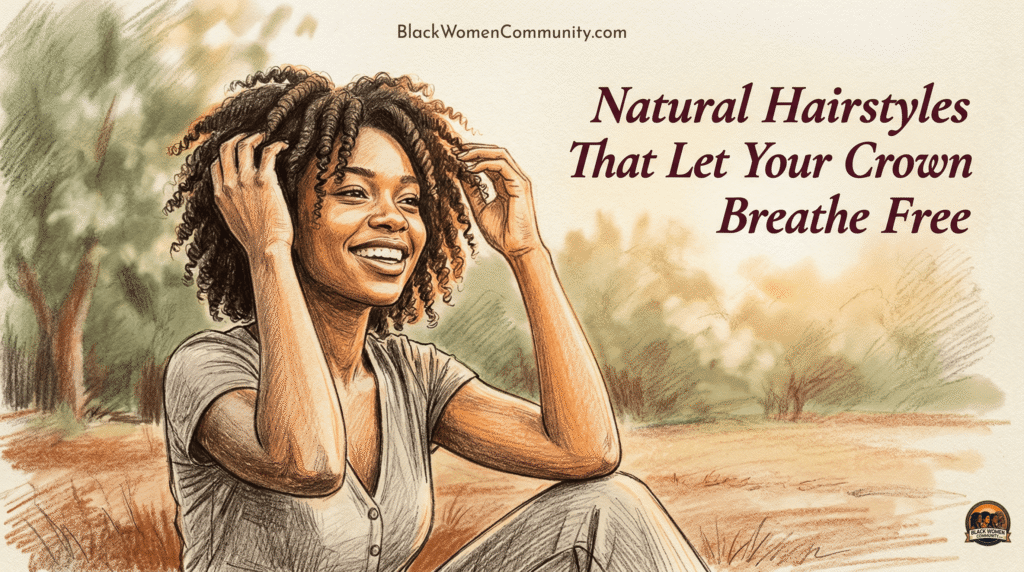
Your natural hairstyles are not a trend or a statement — they’re just you. A love letter to your coils, your crown, and every texture in between.
» A safe space for Black women to heal, grow, and shine. Join Black Women Whatsapp Community ✨
Someone told you your hair needed to be “fixed” before you were old enough to push back.
Maybe it was a teacher, a well-meaning aunt, a magazine that kept showing you someone else’s hairline as the standard. Whatever it was — it got in your head early. And for a while, “doing your hair” meant making it behave. Shrinking it. Stretching it into something easier for other people to absorb.
But natural hairstyles for Black women have never been about other people’s comfort. They are about yours. Your texture, your morning ritual, your relationship with the person in the mirror. And that relationship — messy edges, product-stained fingers, second-day shrinkage and all — is one of the most tender, personal things you carry. This is a space to celebrate that. All of it.
Your Hair Was Never the Problem
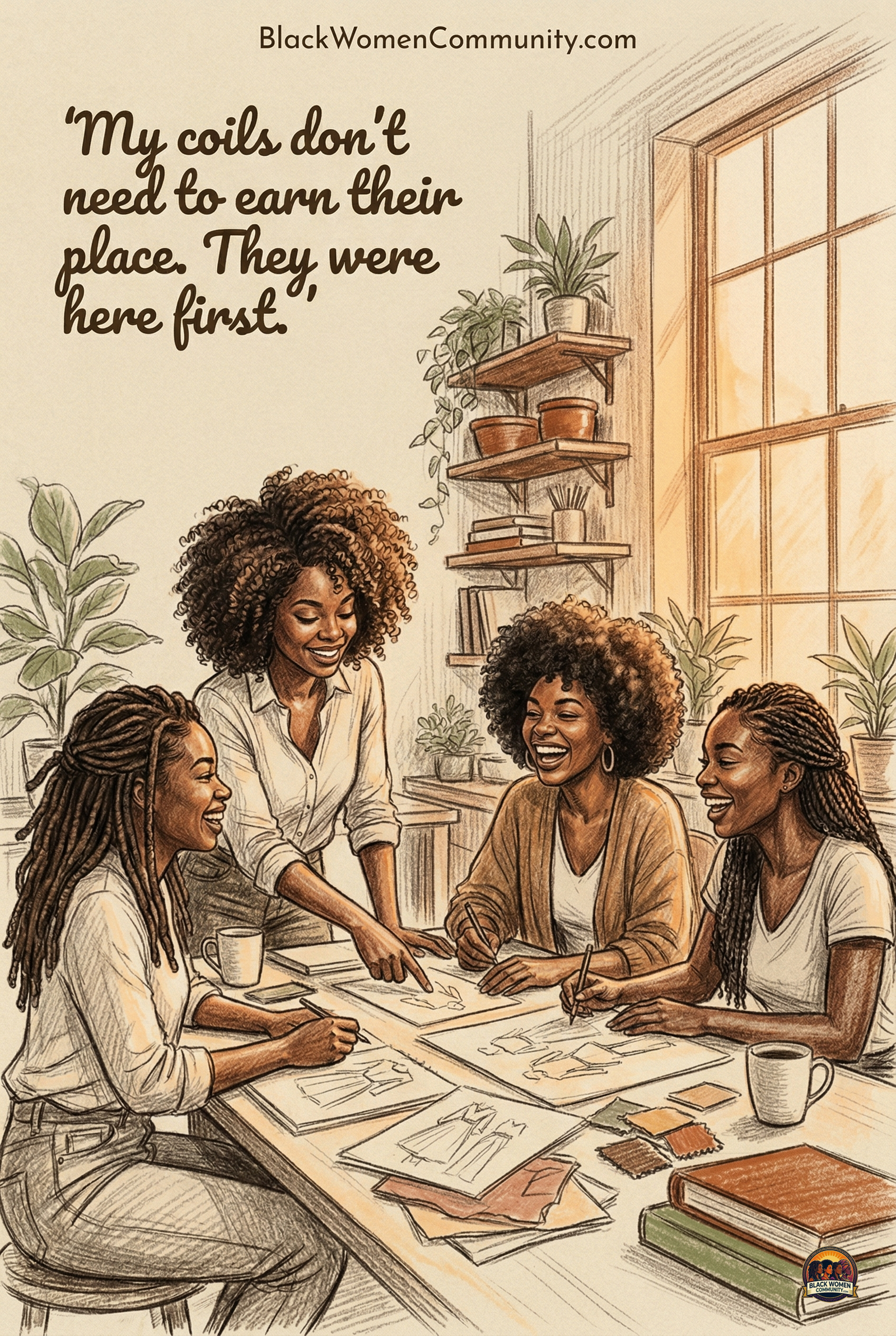
“My coils don’t need to earn their place. They were here first.”
When you start wearing your natural hair — whether that’s for the first time at 32 or you’ve been natural since you were a baby girl and never stopped — something shifts. It’s not dramatic, not overnight. But slowly, you stop asking if it’s “too much.” You stop patting it down before you walk into rooms.
Because the truth is, every time you second-guessed your natural hairstyles, you were solving a problem that was never yours. The rooms weren’t too small for your afro. The afro was too big for the room’s imagination.
You don’t have to shrink so others can see you clearly. The ones who need to look harder — that’s on them.
Wash Day Is a Sacred Ritual, Not a Task
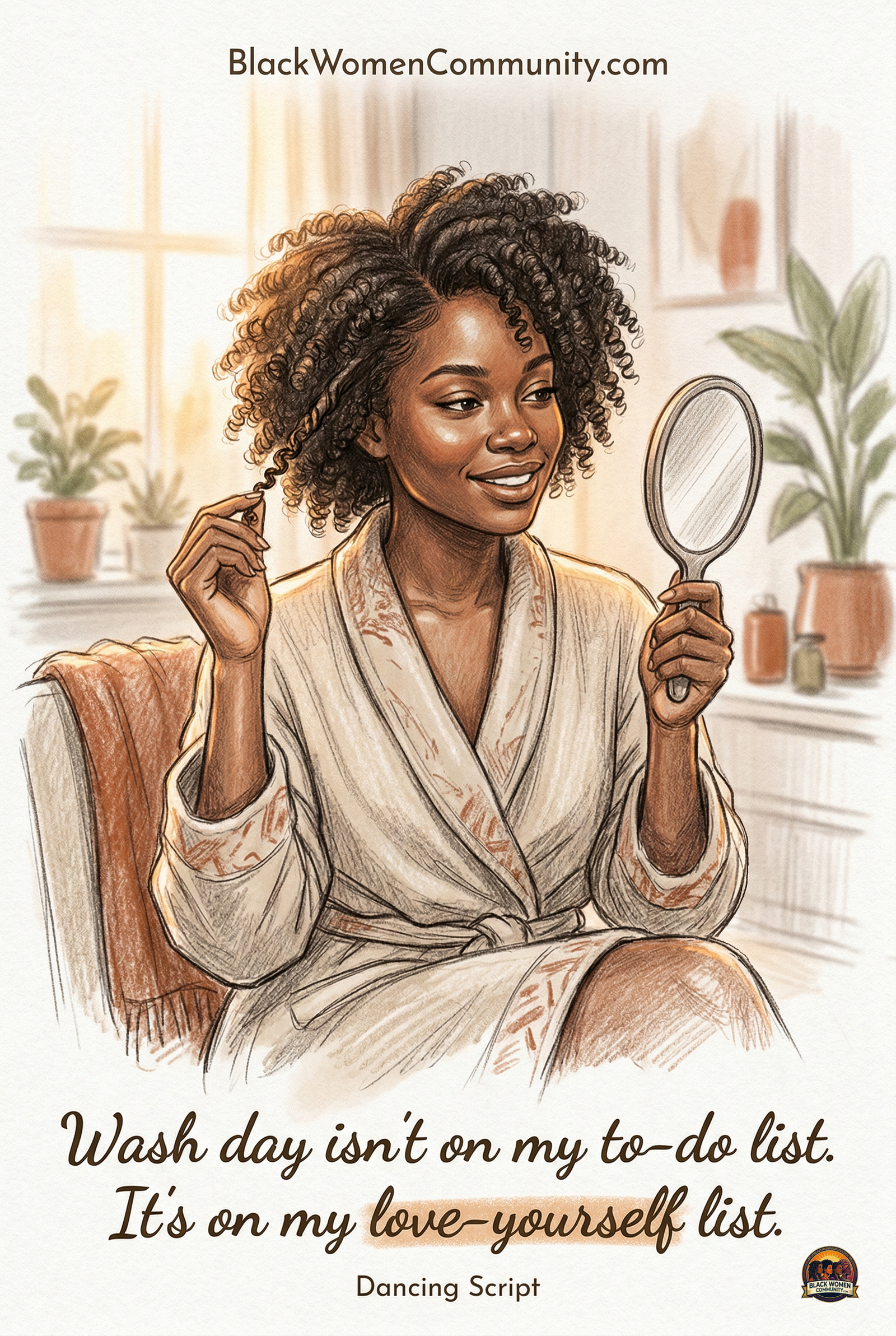
“Wash day isn’t on my to-do list. It’s on my love-yourself list.”
Here’s something that rarely gets said: wash day can be one of the most luxurious things you do for yourself all week.
Yes — the detangling, the sections, the five different products lined up on the bathroom counter. But underneath all of that is you, caring for something that is wholly and entirely yours. Water running over your scalp. The smell of your leave-in. The moment you let your curls spring back up after a good deep condition and they look almost glowing.
That is not a chore. That is ceremony. The Soft Life didn’t invent rest — your ancestors bathed in it. Let wash day be less about the end result and more about the hour you carved out for just yourself.
Put on a show. Light something. Let the whole bathroom smell like shea butter and intention.
Your Texture Is Not a Category. It’s a Language.
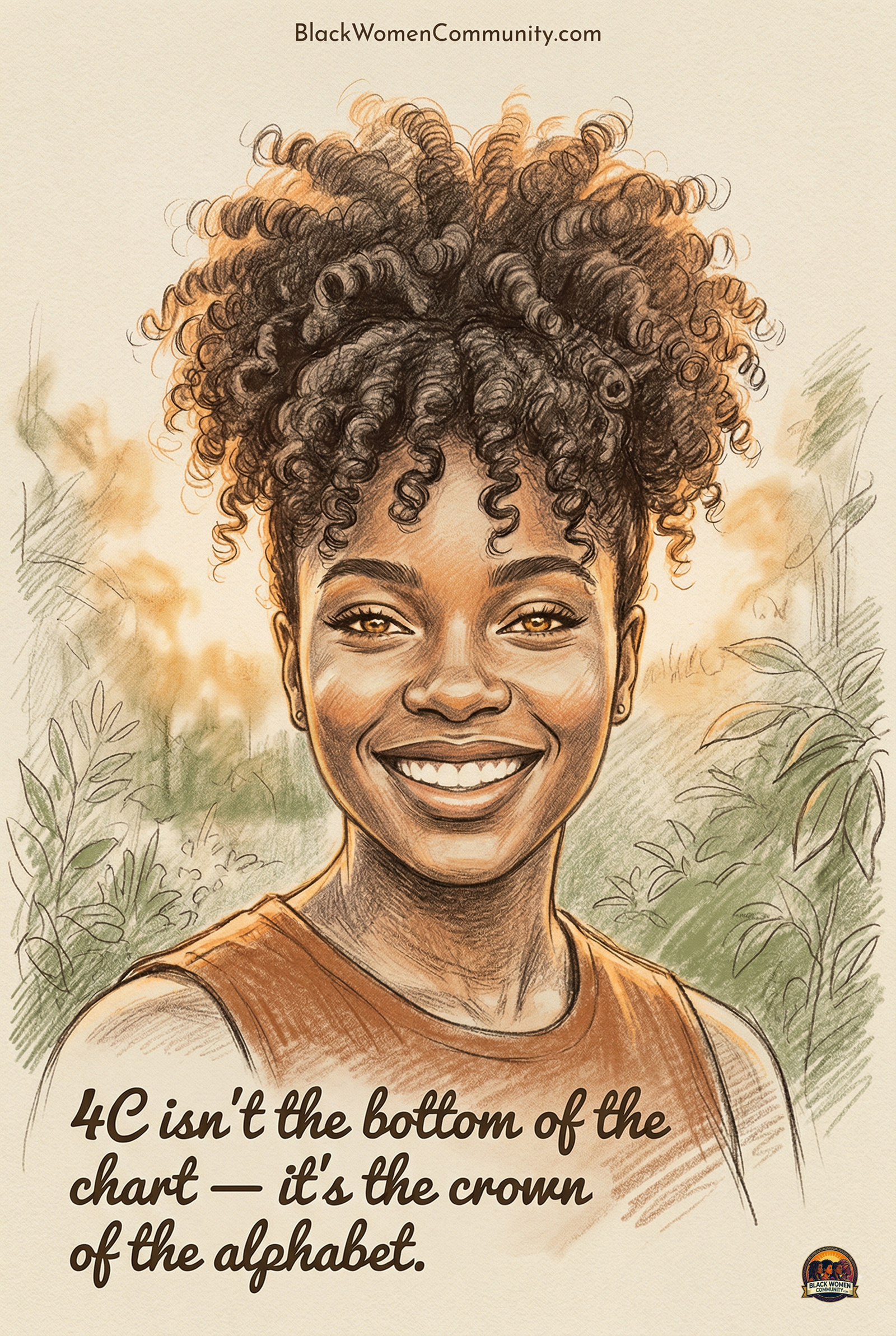
“4C isn’t the bottom of the chart — it’s the crown of the alphabet.”
The hair typing system was supposed to help. And sometimes it does. But somewhere along the way, it quietly became a hierarchy — with looser curls receiving more tutorials, more product launches, more “you’re so pretty for a natural” comments.
If your hair is dense, tightly coiled, and shrinks to a third of its length the moment moisture hits it — welcome. You are not the difficult one. You are not the exception to the rule.
» Join Black Women Whatsapp Community ✨
Your hair does things loose curls could only dream of. Volume that enters the room ahead of you. Coils that hold shapes. The way a twist-out on 4C hair catches light like it was installed by hand.
There is no lower tier. There is just your texture, waiting for you to fall in love with it on its own terms.
She Did Your Hair, She Did Your Heart
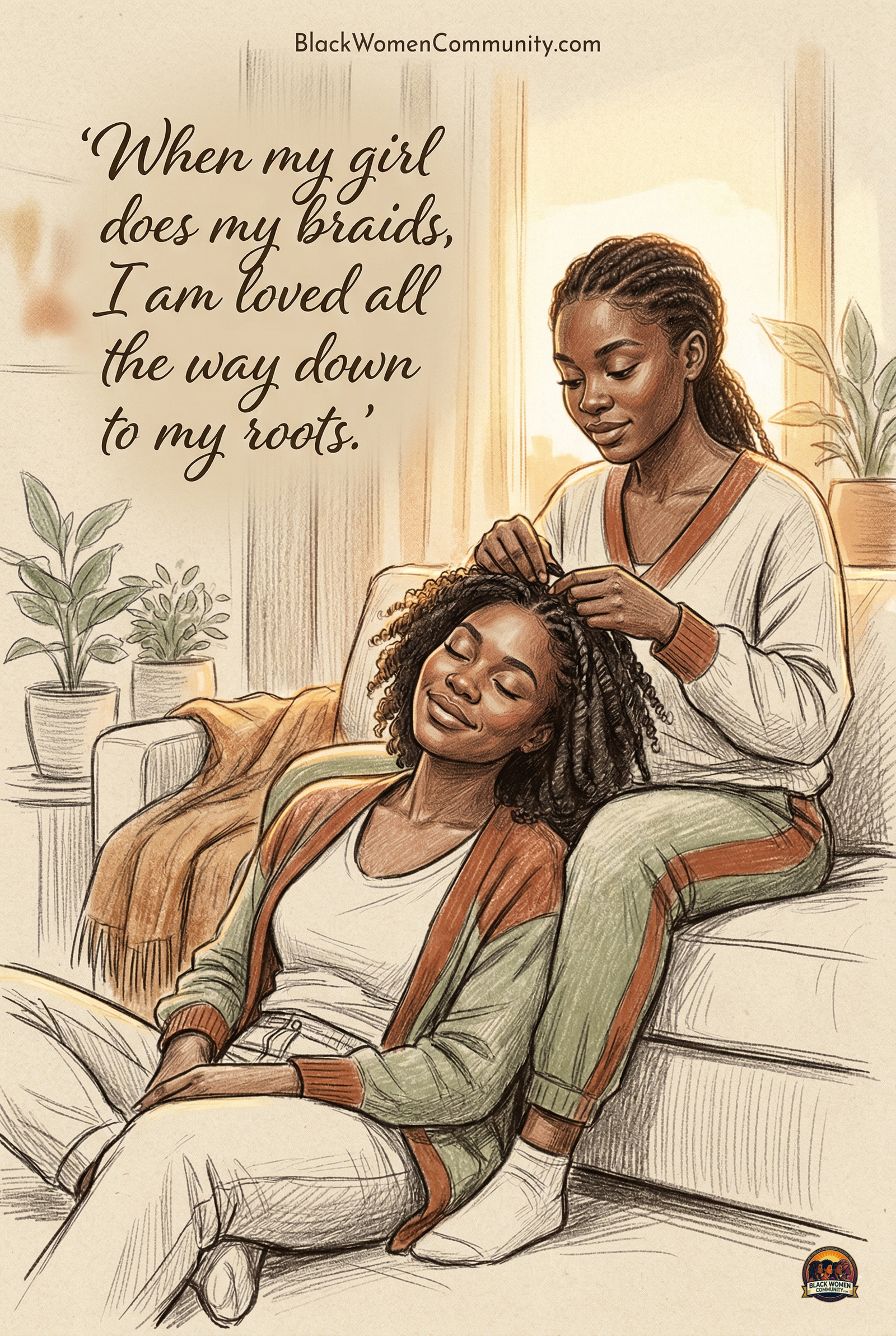
“When my girl does my braids, I am loved all the way down to my roots.”
There is a particular kind of intimacy that lives in natural hairstyles done between Black women.
Sitting between someone’s knees while she sections your hair. The way she instinctively knows to be gentle near your edges. The two hours that somehow become three, with no agenda except talking and being taken care of. Nobody’s rushing. The TV is on. Someone brought snacks.
This is not just hair. This is sisterhood doing what it does best — showing up, literally, with her hands in your crown.
If you have someone in your life who does your hair, love her extra. And if you are that person for someone else, know that what you give is not small.
No, You Don’t Have to Explain Your Afro
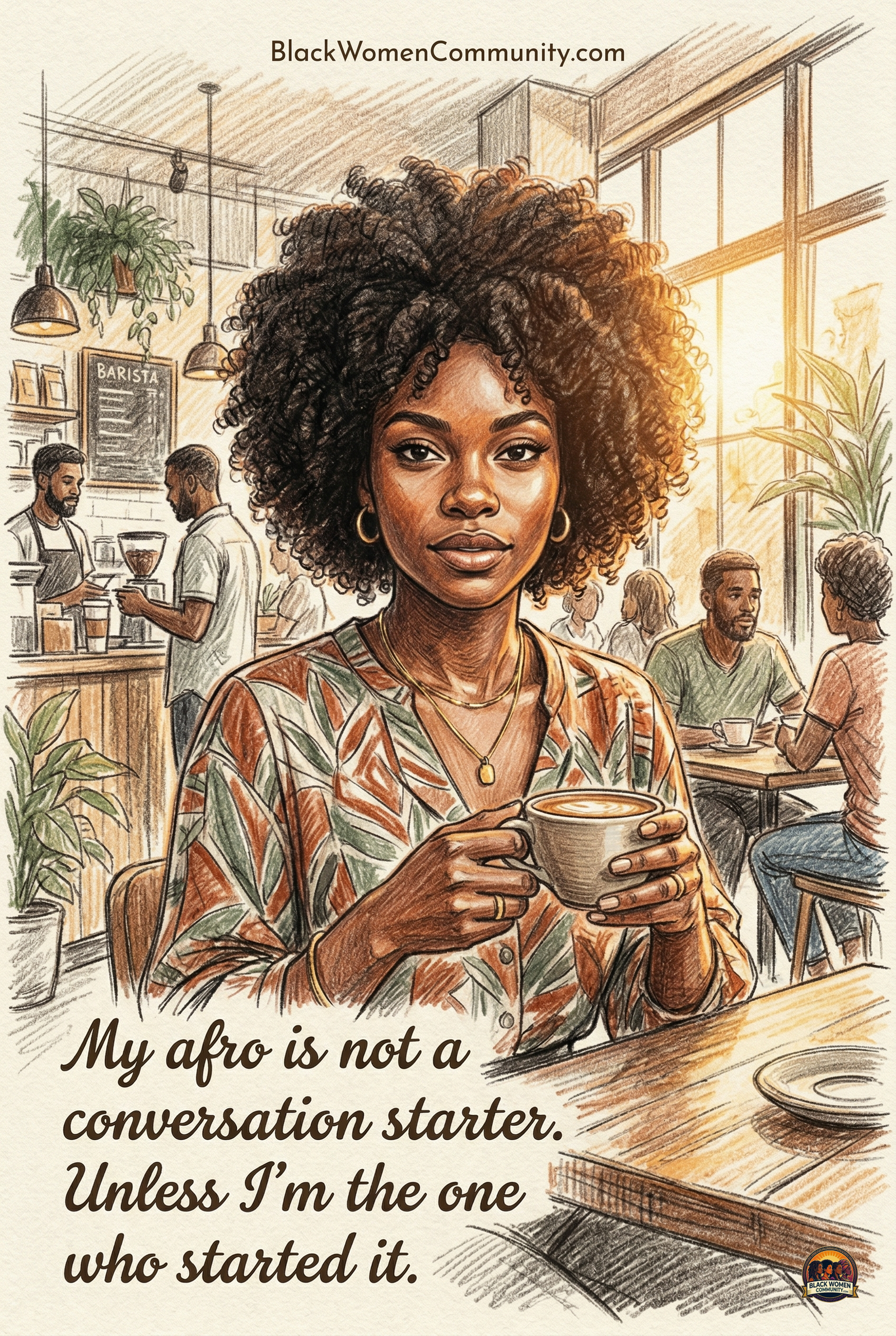
“My afro is not a conversation starter. Unless I’m the one who started it.”
You’ve probably noticed how quickly your natural hair becomes public property in certain spaces. The unsolicited touches. The “is that all yours?” The “how do you wash it?” from someone who didn’t ask for permission before putting their fingers in your crown.
Here is your reminder, warm and direct: you don’t owe anyone an education. Not at work. Not at the grocery store. Not at the family reunion, if that’s where you need to hear it.
Natural hairstyles for Black women are not a statement. They are not activism. They are not an opportunity for your curious coworker to explore her allyship. They are your hair. You woke up with it. That is the full explanation.
A polite smile and a subject change is a complete sentence.
Rest Your Hands, Too
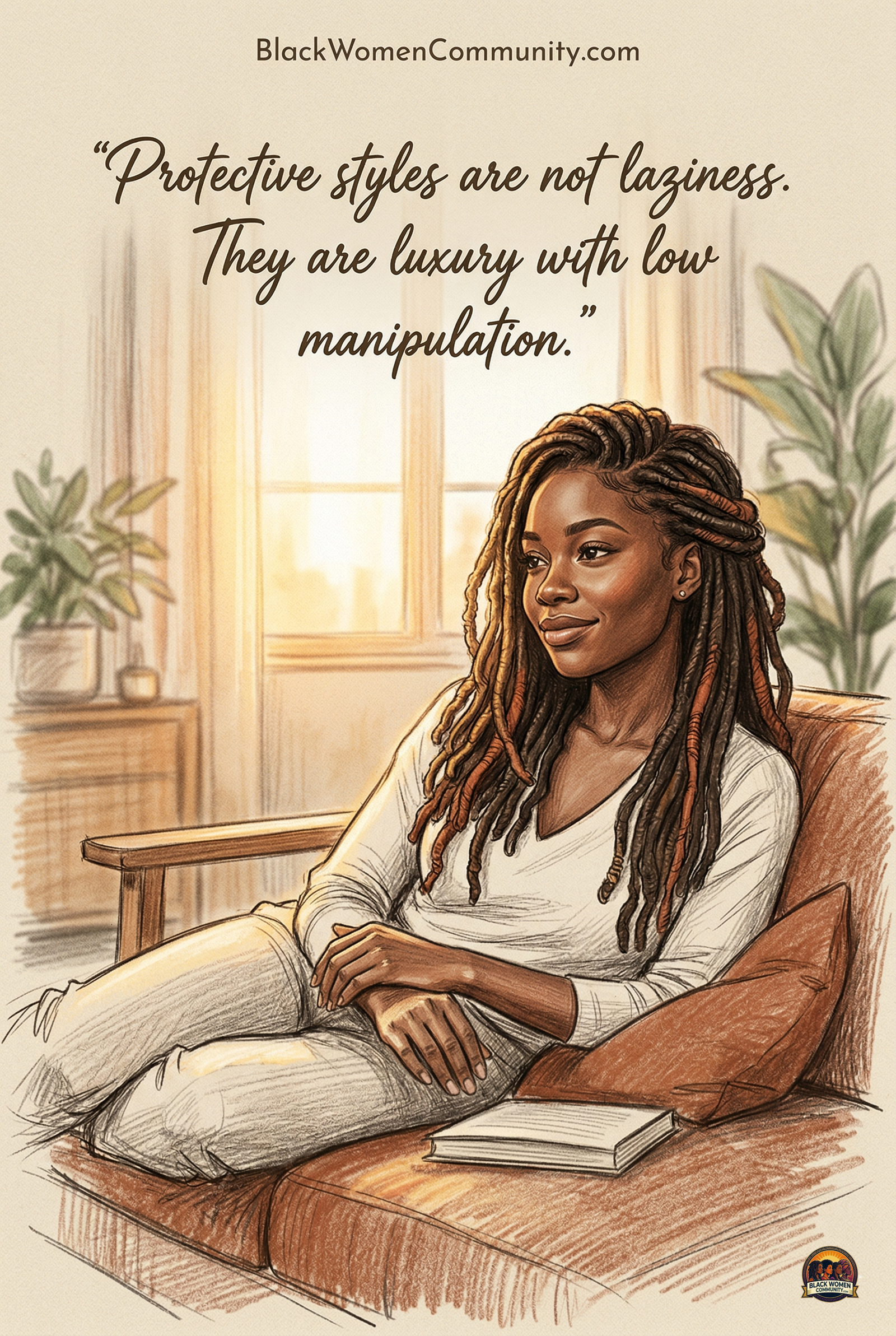
“Protective styles are not laziness. They are luxury with low manipulation.”
Let’s take a moment for box braids. For locs. For twists left in for two weeks because your hands needed a vacation from your own head.
» Join Black Women Whatsapp Community ✨
There is a version of the natural hair conversation that makes you feel like you’re only doing it right if you’re styling every day, retaining every centimeter, documenting your journey with consistent lighting. That version is exhausting. And it misses the point entirely.
Protective styles exist because your hair loves a rest. Your edges love not being manipulated every morning. Your scalp loves being underneath something that holds moisture and simply… waits.
There is nothing lazy about choosing a style that gives you back your mornings. Nothing unnatural about protecting what you’re growing. And nothing less-than about choosing ease.
Your hair is still growing under there. Let it.
The Little Girl Version of You Needed to See This
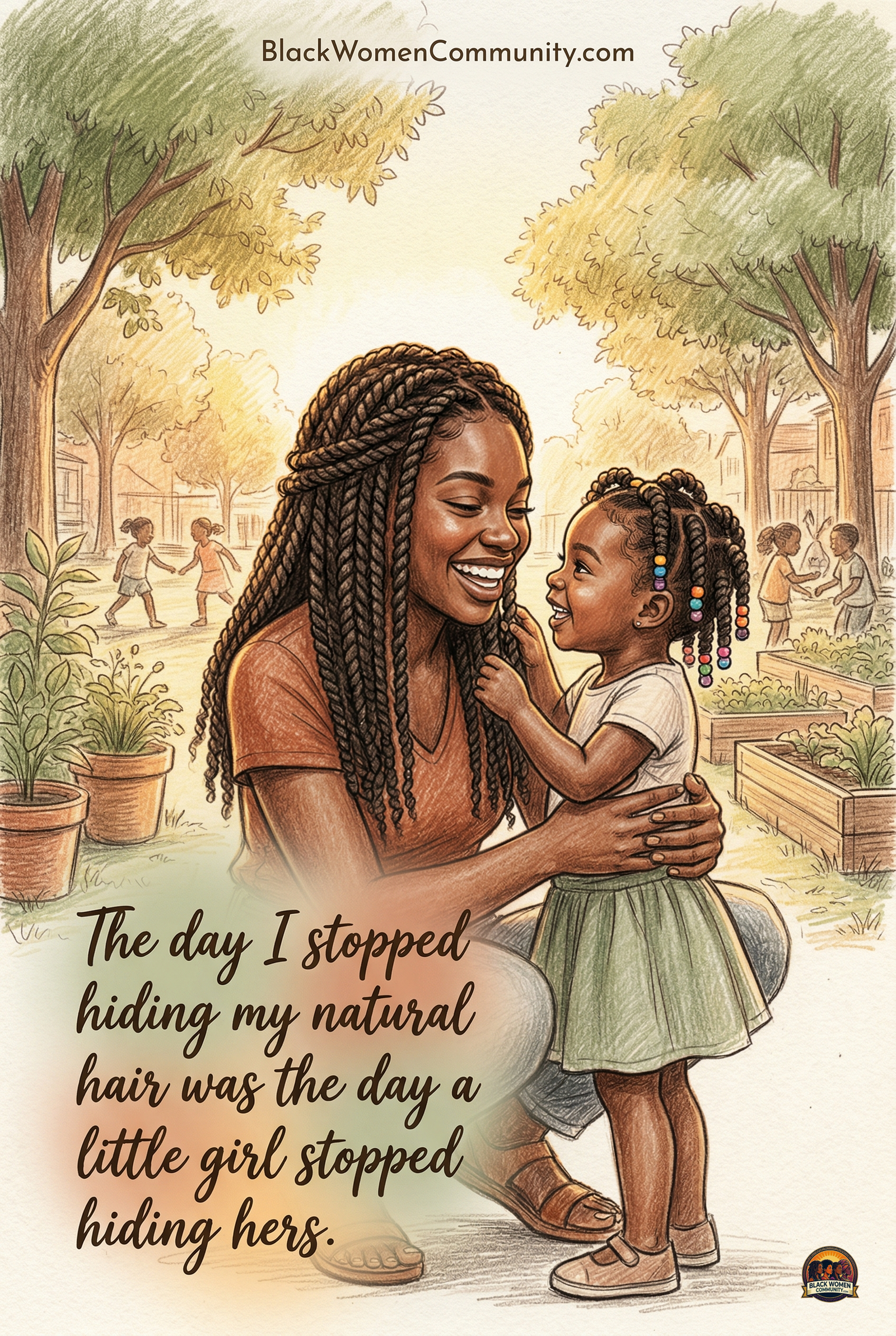
“The day I stopped hiding my natural hair was the day a little girl stopped hiding hers.”
You may not realize the ripple you create when you walk into a room with your natural hairstyles worn freely and without apology.
But she sees you. The seven-year-old in the grocery store. Your niece. Your little cousin who spends twenty minutes in the bathroom trying to flat iron the life out of her perfectly healthy coils because she picked up somewhere — school, TV, the internet — that her hair was the problem.
She is watching you. And when she sees you — crown out, unbothered, glowing — something small and important shifts in her.
You don’t have to make a speech. You don’t have to be anyone’s role model on purpose. Just love your hair the way you wish someone had loved theirs in front of you when you were little.
That’s enough. That is more than enough.
On “Professional” Hair and Who Gets to Decide
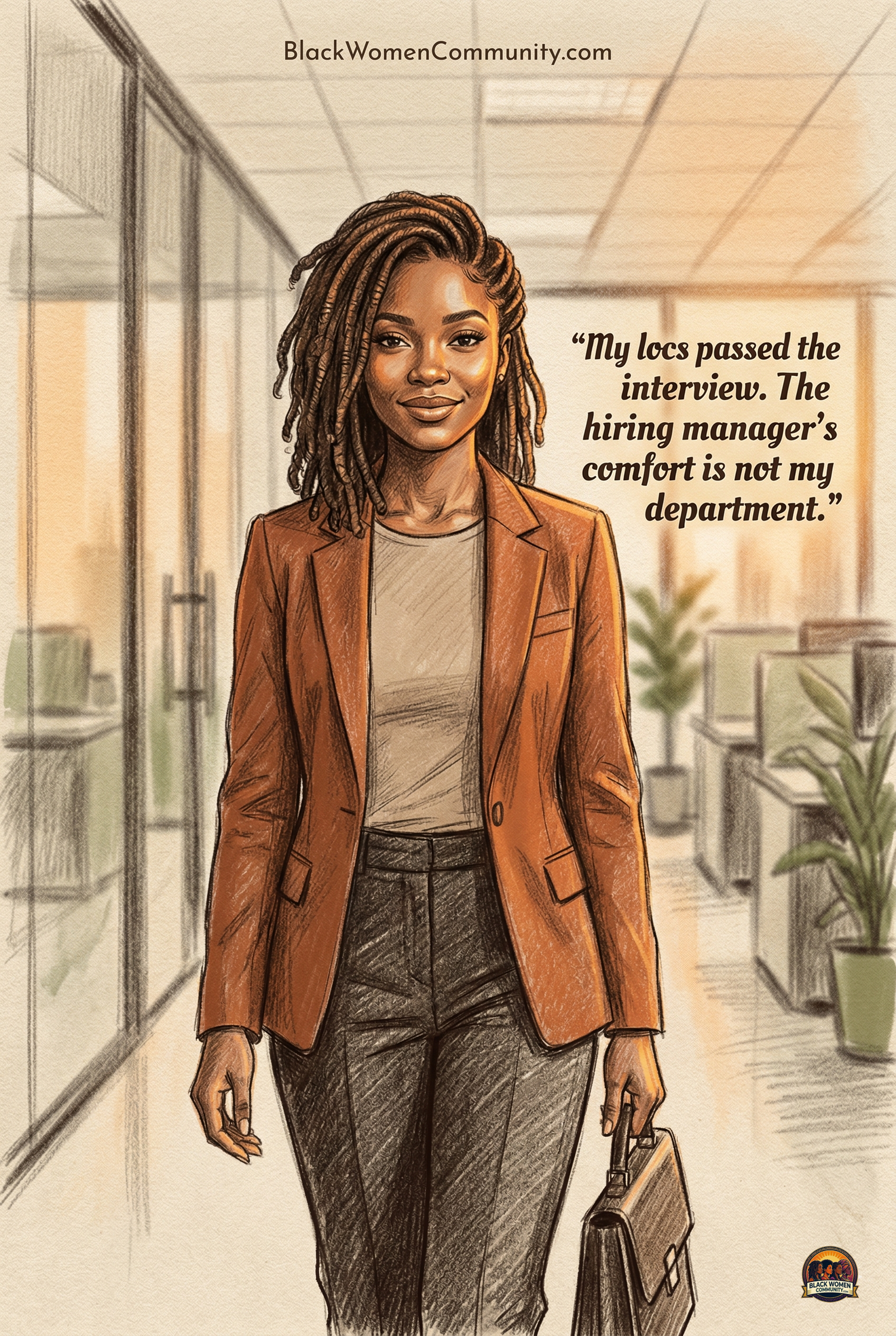
“My locs passed the interview. The hiring manager’s comfort is not my department.”
Let’s say this quietly and clearly: the idea that natural Black hair is “unprofessional” is one of the most exhausting myths still in circulation.
Locs are not unkempt. Braids are not distracting. A wash-and-go is not “less put together.” These are style choices with centuries of culture, care, and community behind them — and no job description or dress code can strip that meaning.
The CROWN Act exists because it had to. Because people were being sent home and turned away because of the hair that grows out of their own heads. That shouldn’t need a law. But here we are.
If you’ve ever straightened your hair for an interview because you were nervous, there is no judgment here — only acknowledgment of how heavy that calculation is. But know this: your natural hairstyles do not disqualify you. And any space that says otherwise has already told you everything you need to know about whether you’d thrive there.
When Your Hair Is Between Styles and You Still Have to Go Outside
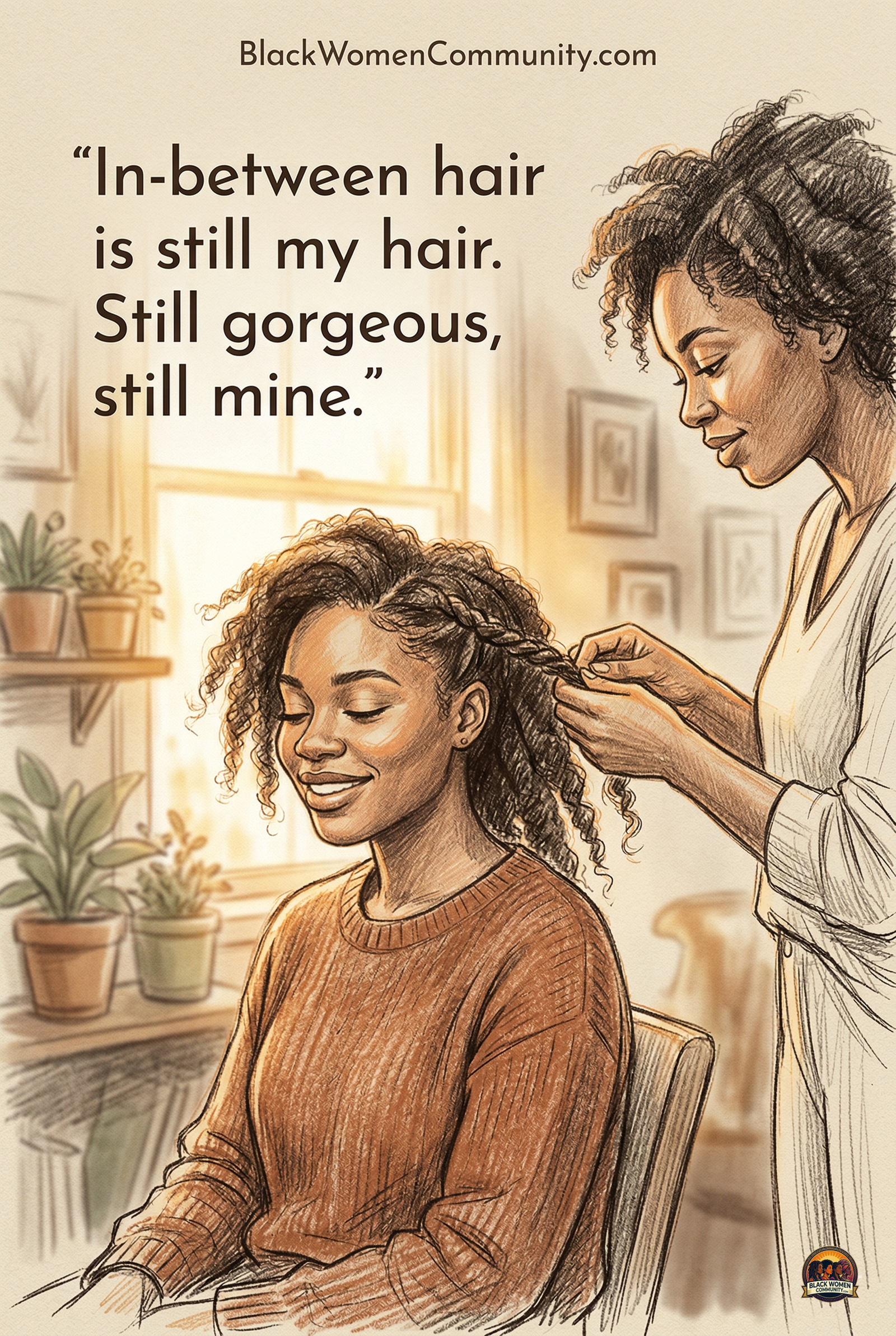
“In-between hair is still my hair. Still gorgeous, still mine.”
Here’s one nobody talks about enough: the awkward middle phase.
The TWA that isn’t quite a fro yet. The locs still baby-thin in the front. The braids growing out and your leave-out looking… honest. The two weeks between wash days when your twist-out is officially a twist-in-memory-only.
This is part of natural hair, too. Not the Pinterest-ready part, but the real, actual, every-day part.
You are not required to have it together at every stage. You’re allowed to cover up with a scarf and go to the gas station. You’re allowed to put on a satin bonnet for two days and call it protective styling.
Nobody’s natural hair journey looks like a highlight reel in real time. Give yourself the grace you’d give any woman you love.
Your Hair Carries Memory
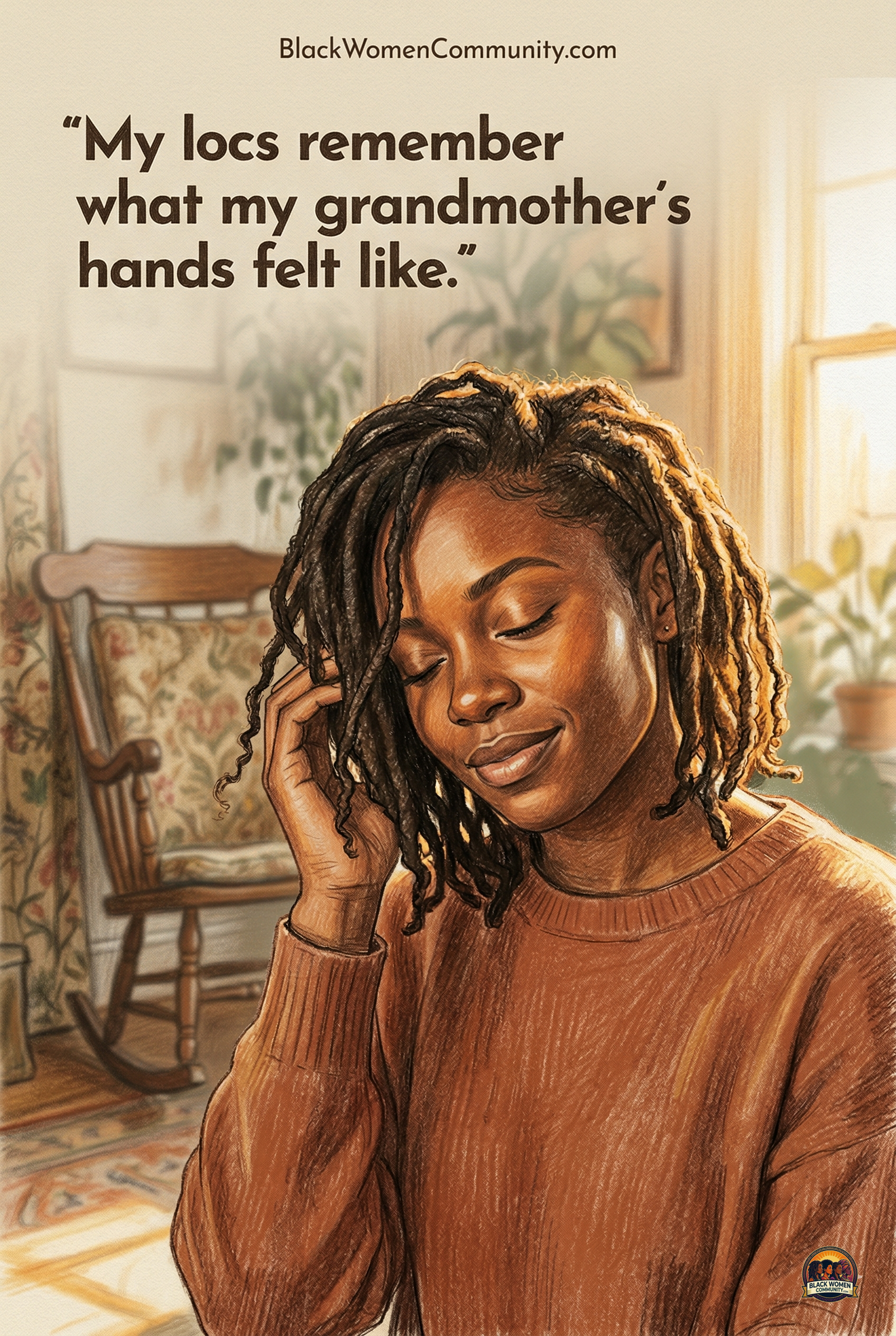
“My locs remember what my grandmother’s hands felt like.”
There’s something almost spiritual about natural hairstyles — and it’s not metaphor. It’s lineage.
» Join Black Women Whatsapp Community ✨
Locs have been worn across the African diaspora for thousands of years. Braiding patterns were once used to carry maps and count seeds. The act of oiling a scalp, of sectioning and twisting, of caring for someone’s crown with your hands — these are inherited gestures. Someone did this before you. Someone’s grandmother, her grandmother, going back further than family trees can follow.
When you sit down to do your hair, you are not just maintaining it. You are participating in something ancient and unbroken. Even if you didn’t grow up knowing that — your hair did.
Wear it like you know.
One More Thing
Natural hairstyles for Black women are not a trend cycle. They are not a political statement. They are not a beauty tutorial or a before-and-after. They are the way your hair grows out of your head in the morning — particular and specific and entirely yours.
What you do with it, how you choose to wear it, whether you loc it or twist it or leave it in a puff so big it has its own presence when you enter a room — that is a private conversation between you and your mirror. And that conversation doesn’t need an audience to be sacred.
Every style you’ve worn, every bad hair day you’ve survived, every compliment you brushed off and every one you quietly kept — it all belongs to the story of a woman learning to love something other people spent years trying to convince her needed fixing.
She was right all along. You’ve always known.
FAQs
What are the best low-manipulation natural hairstyles for everyday wear?
Twist-outs, braid-outs, and wash-and-go styles are among the most popular low-manipulation options — and for good reason. They require minimal daily touching once set, which protects your edges and reduces breakage. Puffs and pineapples are also excellent for refreshing second-day hair without starting over. The “best” style really depends on your texture, your morning time, and your lifestyle. If your week is full, a set of two-strand twists worn for several days is not compromise — it’s strategy.
How do I keep my natural hair moisturized throughout the week without restarting my entire routine daily?
The LOC (Liquid, Oil, Cream) or LCO method is a good place to start — layering products in a sequence that seals moisture rather than just adding it. But between wash days, a light water-based refresher spray (look for aloe vera as a base) can revive shrinkage and add softness without buildup. Satin bonnets and pillowcases at night reduce friction and preserve moisture dramatically. Don’t underestimate what one good night of protection can do for your wash-and-go by morning.
How do I protect my edges while wearing natural hairstyles regularly?
Your edges are the most delicate hair on your head — fine, often the first to break, and the last to grow back when they do. Be mindful of tension at the hairline when installing braids or updos; a style should never pull or feel tight immediately after installation. Wear headbands loosely if at all. Apply a light edge-protecting oil or balm regularly, and if you’re seeing thinning, give your edges a full rest from manipulation for a few weeks. They will come back — they just need a moment.
Are natural hairstyles actually easier to maintain, or is that a myth?
Both things can be true: natural hair can be lower effort than maintaining relaxed hair, and it can also require its own kind of dedicated care. What changes is the type of effort. You’re no longer managing chemical regrowth or heat damage, but you are managing moisture, detangling, and shrinkage. Many women find that once they learn what their specific hair needs — and stop trying to follow routines designed for a different texture — the whole thing becomes much simpler. The learning curve is real. The ease on the other side of it is, too.
What natural hairstyles are best for transitioning from relaxed to natural hair?
Transitioning can be one of the more tender stages in a natural hair journey — two textures, one head, and a whole lot of feelings. Protective styles like box braids, cornrows, or sew-ins are popular during this phase because they allow new growth without requiring you to style two textures daily. Twist-outs on the transitioning length can blend textures beautifully. And if at any point the big chop calls to you — trust that instinct. Some women find cutting the relaxed ends off the most freeing thing they’ve done in years.
How do I find natural hairstyles that work for my specific curl pattern and lifestyle?
The most honest answer: trial and time. Curl typing gives you a starting point, but your hair’s porosity, density, and how it responds to humidity will matter more than your type number. Find a few creators whose texture resembles yours — not just visually, but in how they describe their hair behaving — and try their methods. Then adapt. Your natural hair is not a problem to be solved with the right formula. It’s a relationship. And like any real relationship, what works deepens over time.
» A safe space for Black women to heal, grow, and shine. Join Black Women Whatsapp Community ✨