These powerful Black women book quotes aren’t just words on a page. They’re permission slips, mirrors, and quiet invitations to come home to yourself.
» A safe space for Black women to heal, grow, and shine. Join Black Women Whatsapp Community ✨
There’s a particular kind of hunger that no meal can touch.
You know the one. It shows up late at night when the house is quiet and you’re scrolling through nothing, feeling vaguely unsatisfied and not quite sure why. It’s not loneliness exactly. It’s more like a longing to be known — to read something and feel, finally, that someone saw the full picture of you and wrote it down.
That’s what the right book quote can do. Not inspire you to hustle harder or remind you of your worth like a bumper sticker. But crack something open. Reach past the performance of okay and sit with you for a minute.
These are quotes from Black women who wrote with their whole chest. Authors, poets, theorists, dreamers, and truth-tellers who put language to experiences that often went unnamed. Gather what feeds you.
When She Said What You Couldn’t Find Words For
“She decided to enjoy her life. Not earn it. Not prove it. Just live it, warm and unhurried, like honey moving.”
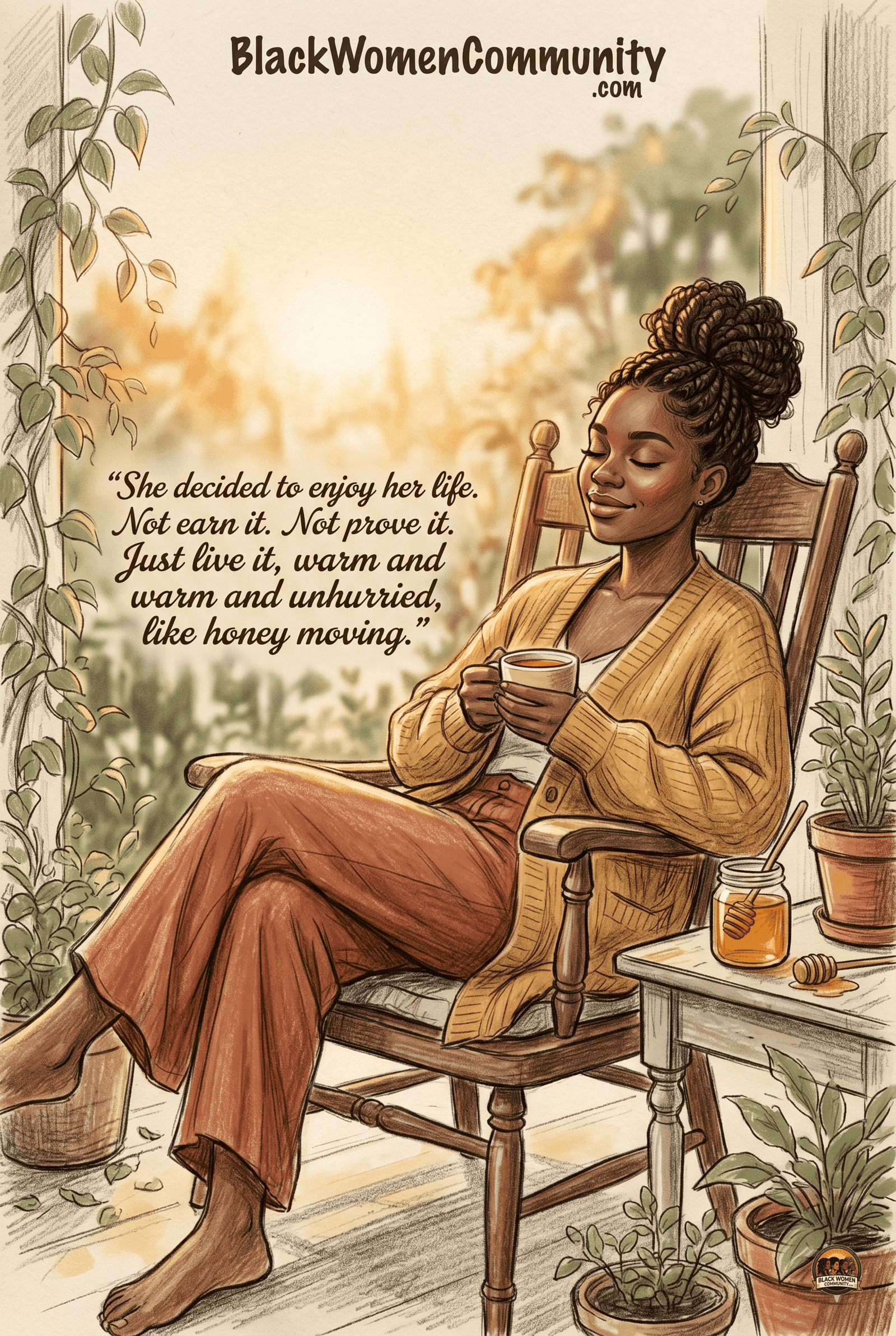
There’s a version of us that was taught, somewhere along the way, that ease had to be deserved. That you rest after. That joy is a destination, not a way of traveling. Toni Morrison wrote about Black women’s interior lives with such tenderness that reading her sometimes feels like being handed back something you didn’t know was missing. Her characters don’t just survive — they want things. Soft things. They desire, they linger, they dream in color.
That permission is in the quote above. Enjoyment isn’t a prize at the end. It’s the practice. Your life doesn’t have to be earned. It already belongs to you.
The Quiet That Holds You
“Rest isn’t something I’m working toward. It’s something I was born deserving.”
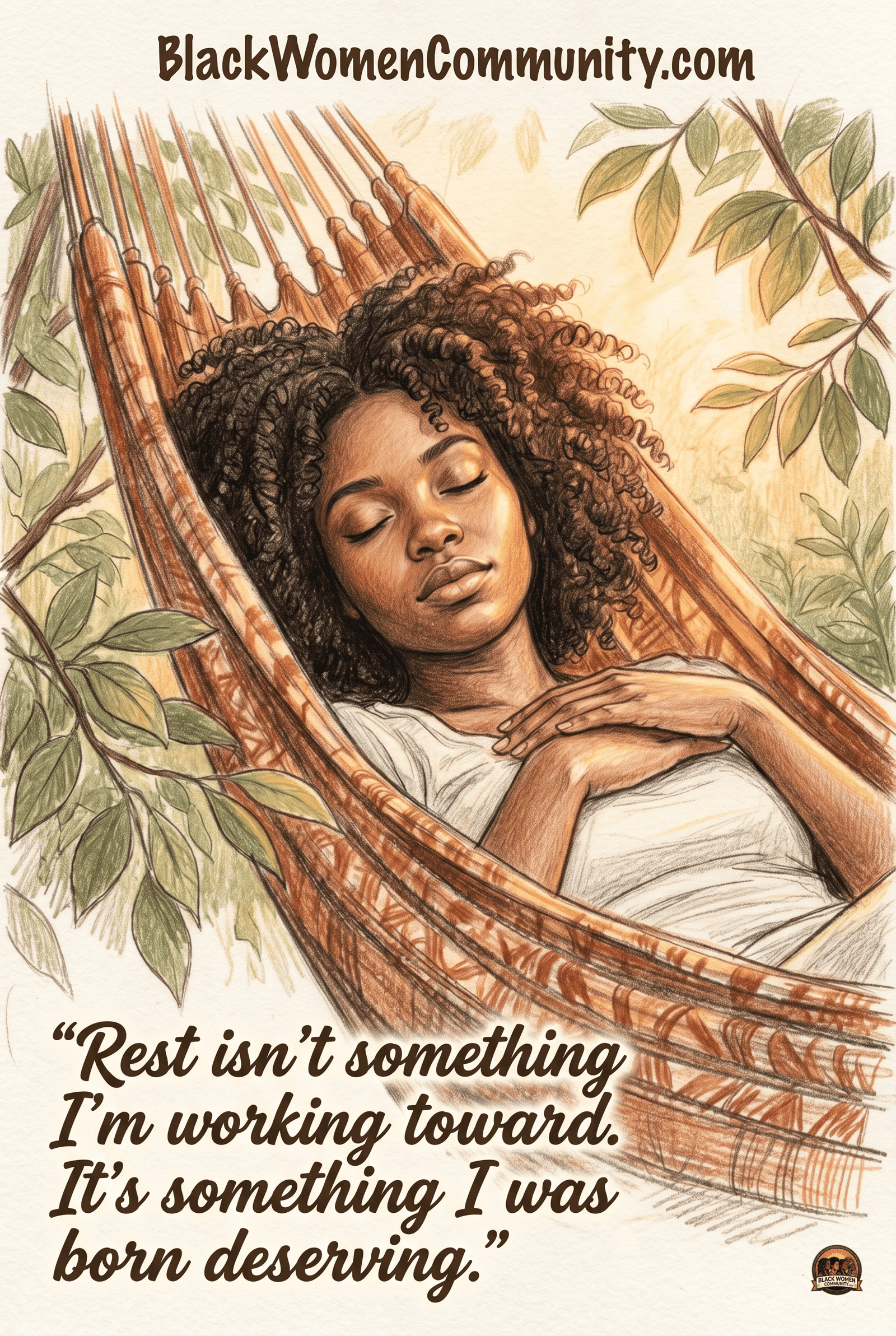
Audre Lorde wrote in her biomythography, Zami, about the labor of simply existing in a body the world had opinions about. She talked about exhaustion not as weakness but as information — the body’s honest report. Her poetry and prose gave so many of us a framework for understanding that depletion isn’t a personal failure. It’s often the logical result of pouring into everything except yourself.
You don’t have to justify a nap. You don’t have to be sick, depleted, or on the edge of collapse before you’re allowed to stop. The Soft Life isn’t a trend — it’s a reclamation. Rest as inheritance.
» Join Black Women Whatsapp Community ✨
What Your Crown Actually Means
“My coils aren’t a statement. They’re just mine. And that’s always been enough.”
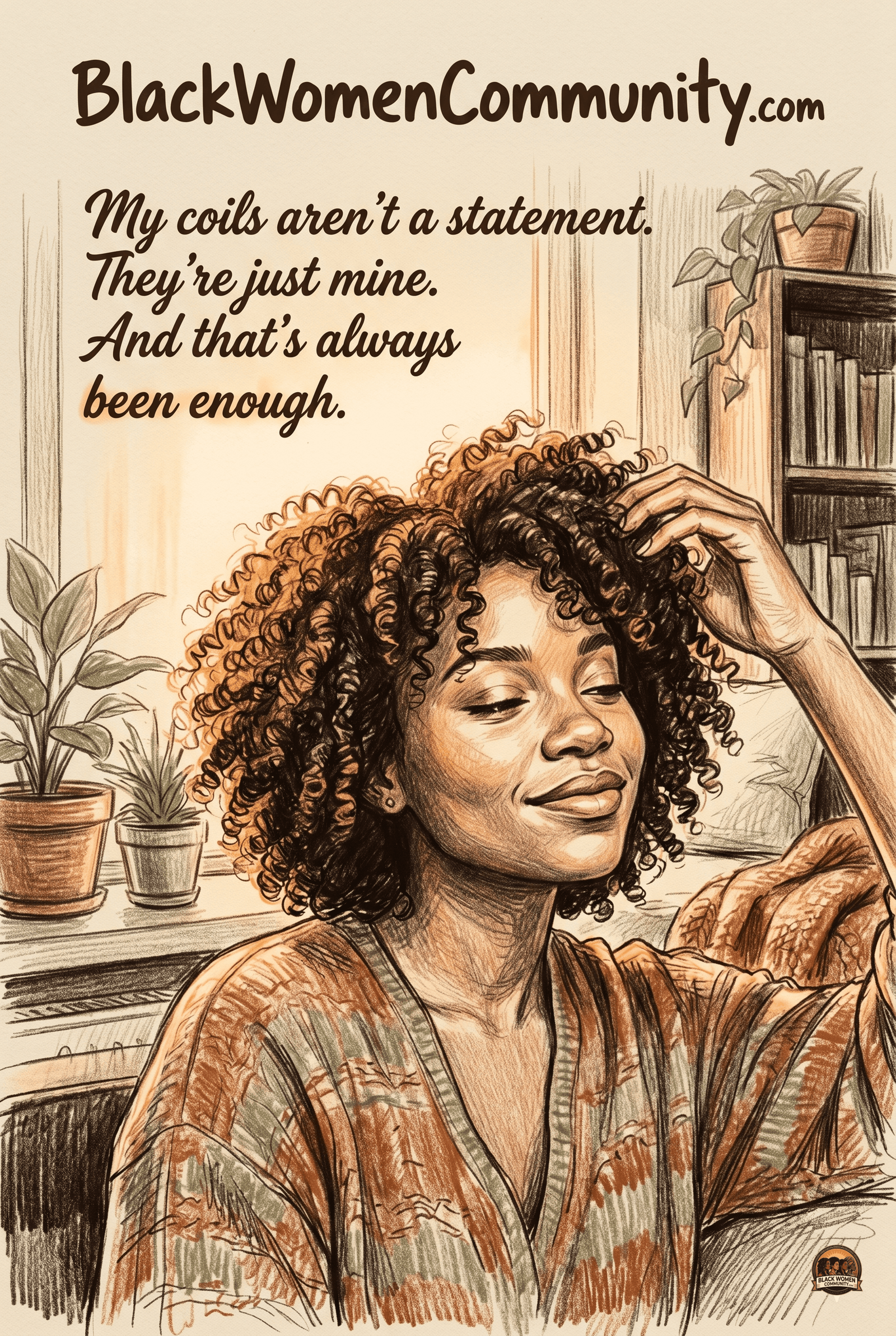
Natural hair politics can be exhausting. The conversations, the policies, the workplace negotiations around something that grows from your head unbothered. But Alice Walker, in The Color Purple and elsewhere, kept returning to the radical simplicity of being in your body without apology. Celie learning to see herself. Shug Avery refusing to shrink. There’s something in Walker’s work that insists your physical self — your skin, your texture, your shape — was never the problem.
Your crown doesn’t need a manifesto. You don’t have to be making a statement every time you walk through a door. Sometimes coils are just coils — beautiful because they’re yours, full stop.
Abundance Has Always Been Your Natural State
“She stopped chasing and started choosing. Everything shifted.”
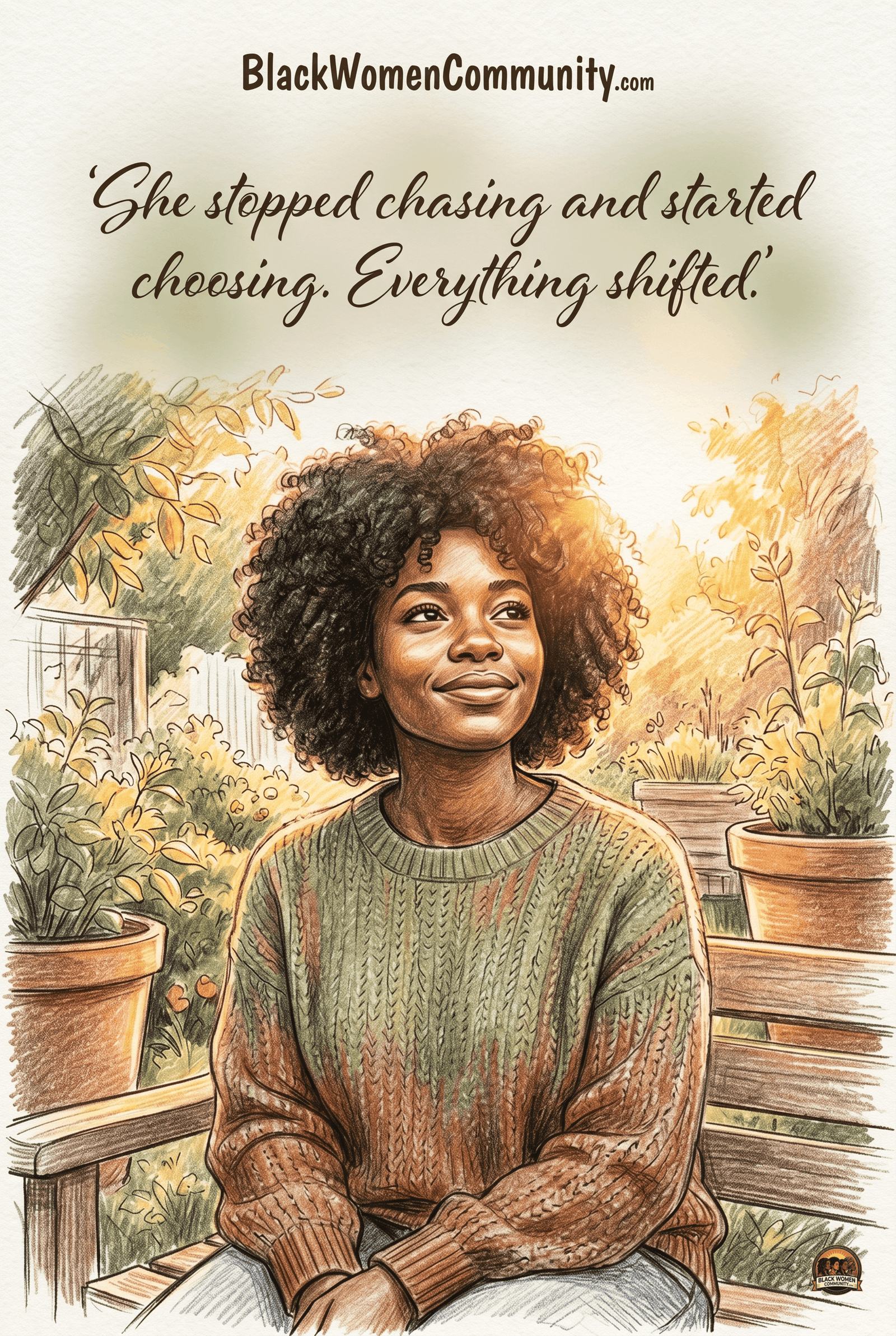
Octavia Butler built entire worlds to explore what power looks like when it lives inside a Black woman’s body — how it moves, what it costs, what it makes possible. Her characters in the Parable series aren’t waiting to be saved. They’re building. Not from scarcity but from vision. Butler seemed to understand something about the difference between striving and becoming — that when you’re rooted in your own worth, you stop running toward things and start drawing them to you.
The shift from chasing to choosing isn’t passive. It’s one of the most active, internal things a woman can do. It’s the decision that your desire is valid, your standards aren’t too high, and the right things will find you when you’re no longer sprinting past them.
» Join Black Women Whatsapp Community ✨
On Softness as Something Sacred
“Soft is not small. Soft is the whole ocean — still and moving at once.”
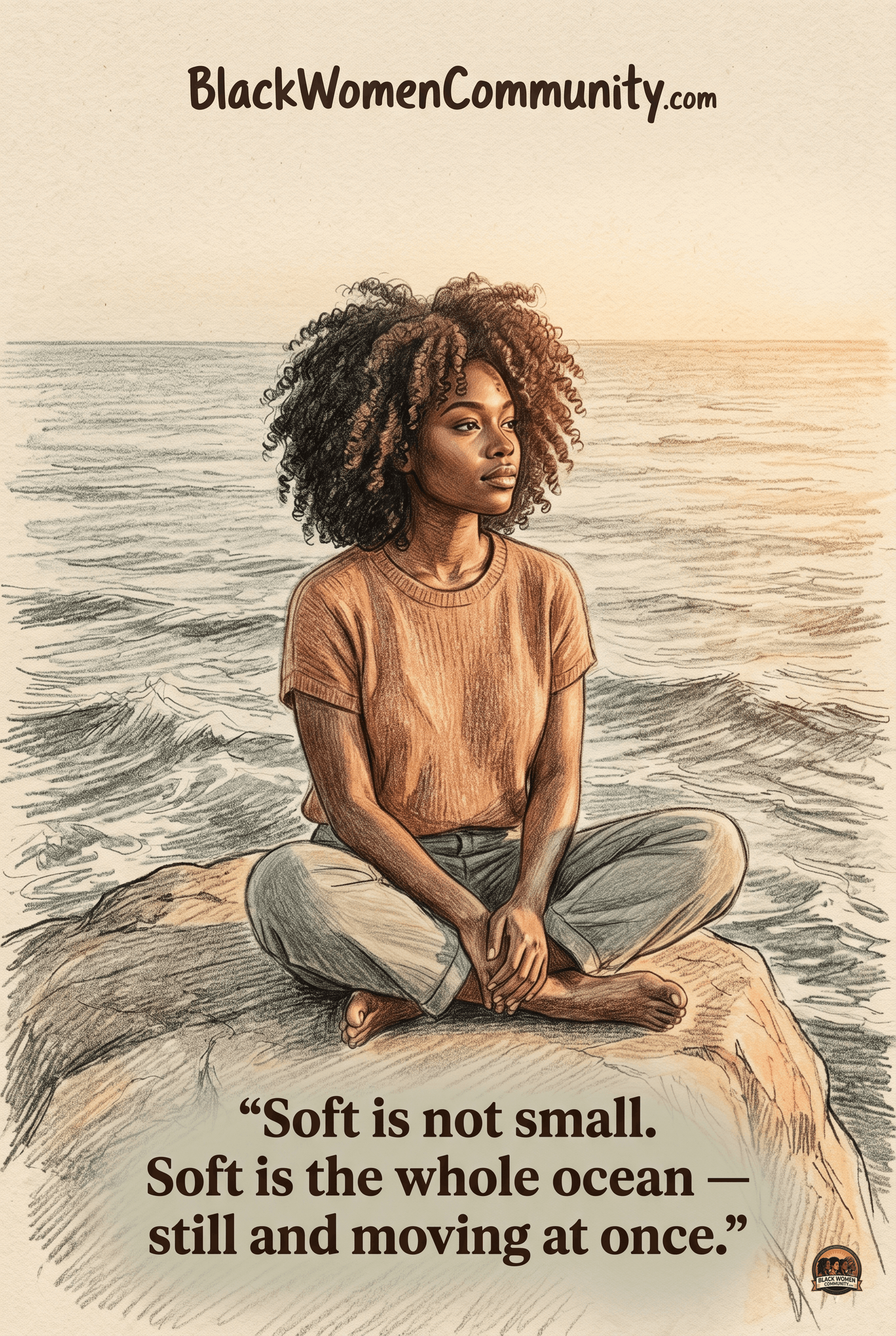
Ntozake Shange’s for colored girls who have considered suicide / when the rainbow is enuf is one of the most emotionally layered texts in American literature. The final line — about finding god in yourself and loving her fiercely — has been quoted so many times it could become wallpaper. But what hits different when you sit with the full text is how tender it is. How it refuses to let pain be the main character. How it keeps reaching toward the woman underneath the wound.
Softness in Shange’s work isn’t frailty. It’s presence. The capacity to feel, to move, to be moved. That’s not weakness. That’s the whole ocean.
She Was Always Talking About You
“Honey skin and a quiet knowing — that combination has always been dangerous to ordinary.”
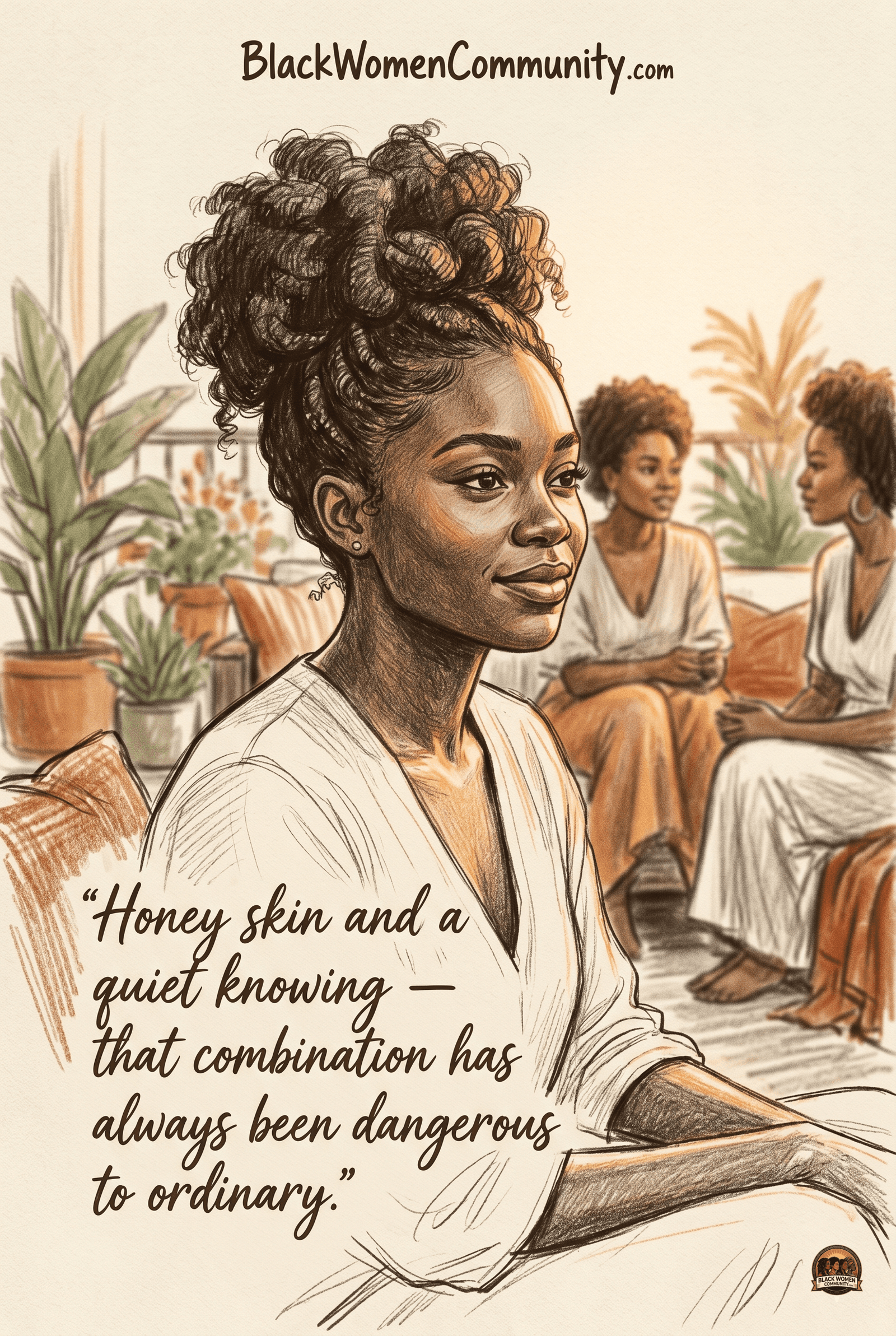
Zora Neale Hurston didn’t write about Black women the way the world wrote about Black women. She wrote about them the way they talked to each other on porches in the South — with fullness, humor, desire, contradiction. Janie Crawford in Their Eyes Were Watching God isn’t exceptional because she suffered. She’s unforgettable because she wanted — a love that matched her, a life that was hers, the horizon.
Hurston saw her characters’ specific beauty and wrote it as fact, not exception. Your honey skin, your quiet knowing, your particular way of taking up space — that’s not a type. That’s you. And some writers have always known you were worth depicting in full.
The Sisterhood Doesn’t Need Fanfare
“We don’t have to explain ourselves to each other. That’s the whole gift.”
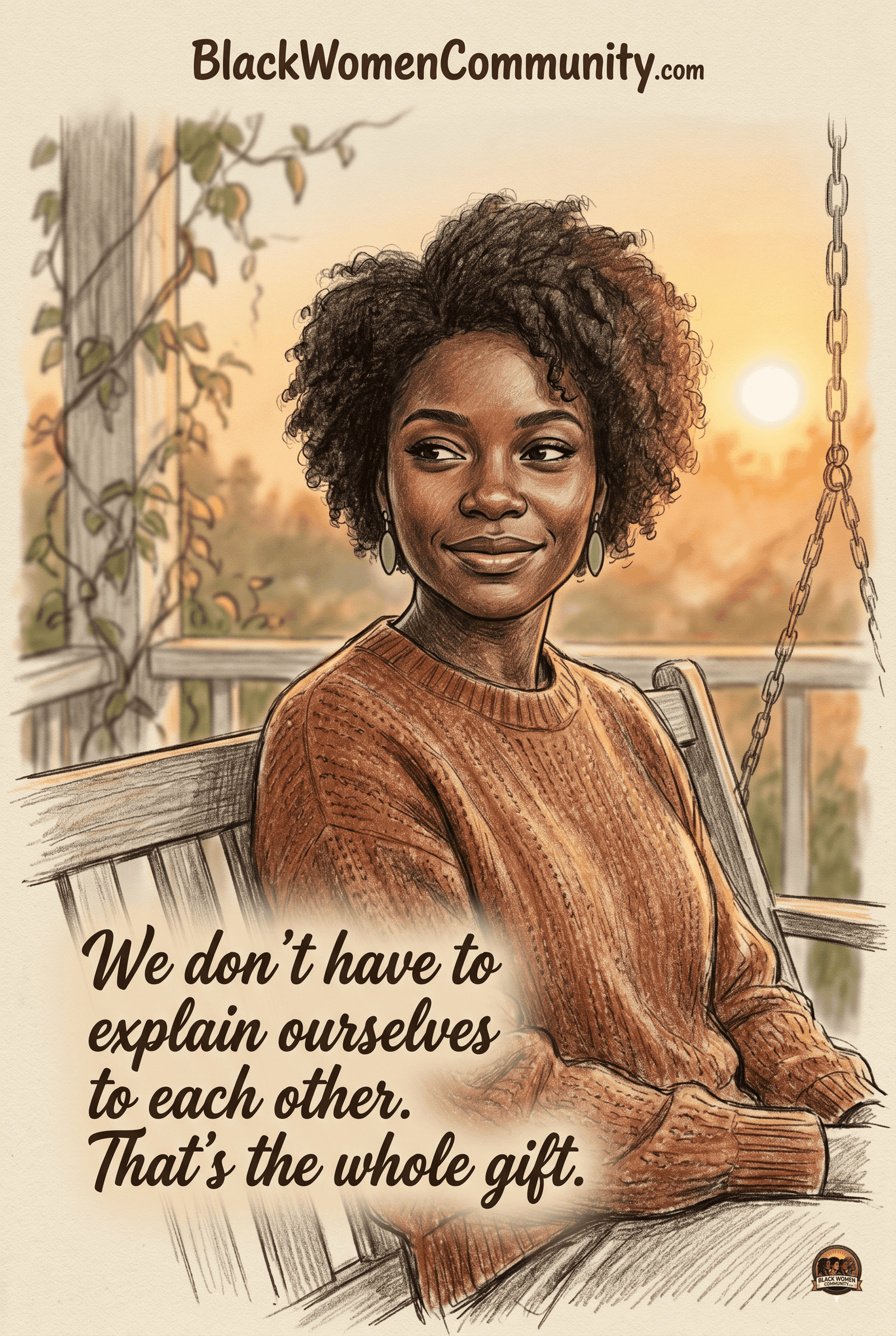
bell hooks wrote about love and community as practices, not feelings — things you do, not just have. In All About Love, she argues that we’ve confused attachment and need for love, when love is actually a choice, a verb, something you extend with intention. Her work on sisterhood goes beyond warmth — it’s about showing up with clarity, with honesty, with the willingness to be accountable to each other.
The best friendships between Black women often have this quality. No need for extensive explanation. The shorthand is instant. The safety is assumed. You text her at 2am and she already understands the energy. That ease — that’s not just chemistry. That’s love as hooks defined it.
» Join Black Women Whatsapp Community ✨
Before You Go
Books written by Black women are doing something specific that no algorithm can replicate. They’re reaching back through time to tell you: someone knew this feeling before you, and they put it somewhere you could find it.
The quotes throughout this piece aren’t instructions. They’re not goals to chase or standards to meet. They’re mirrors — reflections of something that was already true about you, held up by women who believed that truth was worth writing down.
Take what feeds you. Leave what doesn’t. Come back to the pages when the hunger returns.
Some books were always waiting for you to pick them up.
» Join Black Women Whatsapp Community ✨
FAQs
Which Black women authors write most about self-worth and inner peace?
Audre Lorde’s Sister Outsider and The Cancer Journals are foundational for anyone working through questions of identity and self-preservation. bell hooks’ All About Love reframes love as an intentional practice rather than a feeling. Toni Morrison’s fiction, particularly Sula and Song of Solomon, explores Black women’s inner lives with rare fullness. These aren’t self-help books — they’re literature that happens to do what self-help rarely does: trust your intelligence while meeting you in the mess.
Are there powerful Black women book quotes specifically about rest and not overworking?
Audre Lorde wrote explicitly about rest as necessary resistance in her essays. She pushed back on the idea that Black women must be perpetually productive or visibly strong to matter. Tricia Hersey’s more recent work Rest Is Resistance picks up that thread directly — arguing that choosing to rest is a political and spiritual act, not a luxury. Both are worth bookmarking for the days when guilt tries to pull you back to hustle.
What are good books by Black women that celebrate joy, not just hardship?
Zora Neale Hurston’s Their Eyes Were Watching God is the classic answer — Janie Crawford’s story is about desire and becoming, not suffering. More recently, writers like Yrsa Daley-Ward (bone) and Warsan Shire blend lush imagery with deep tenderness in ways that celebrate Black womanhood without centering pain. For something lighter in tone, the essays of Samantha Irby are genuinely, loudly funny — joy as literature.
How do I find Black women authors whose writing feels made for me specifically?
Start with the recommendation chains. When a quote or passage stops you cold, go deeper into that author’s catalog, then look at who they cite, who they credit, who they were in conversation with. Black women authors tend to write toward each other across generations — Hurston influenced Morrison, Lorde influenced hooks, and the conversation continues. Following that lineage is one of the most satisfying ways to build a reading life that actually reflects you.
Is there a difference between Black women’s literature and general self-help for women?
The difference is specificity. General wellness writing often generalizes in ways that flatten your experience. Literature written by Black women is not trying to be universal in that flattening way — it’s particular, grounded in a specific embodied experience, and that particularity is what makes it land. When Toni Morrison writes interiority, she’s not writing toward everyone equally. She’s writing toward you. That directness is the point.